Formally, in the IPCC4 report, there is a range in predicted temperatures (in the year 2100) of 1.5 to 5 degrees C.
5 degrees C (= 9 degrees F) would be relatively catastrophic.
So, what drives this range and how can one estimate what is the most probable correct model?
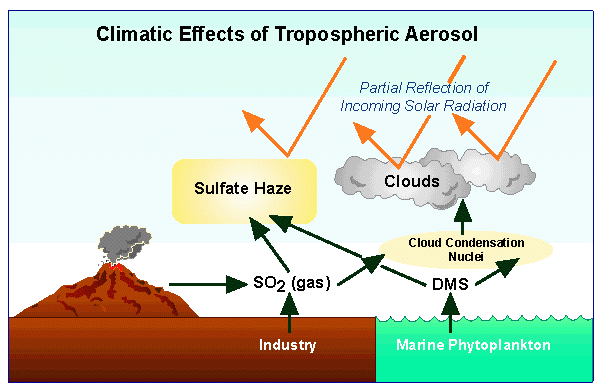
Qualitatively one can look at the system like this:
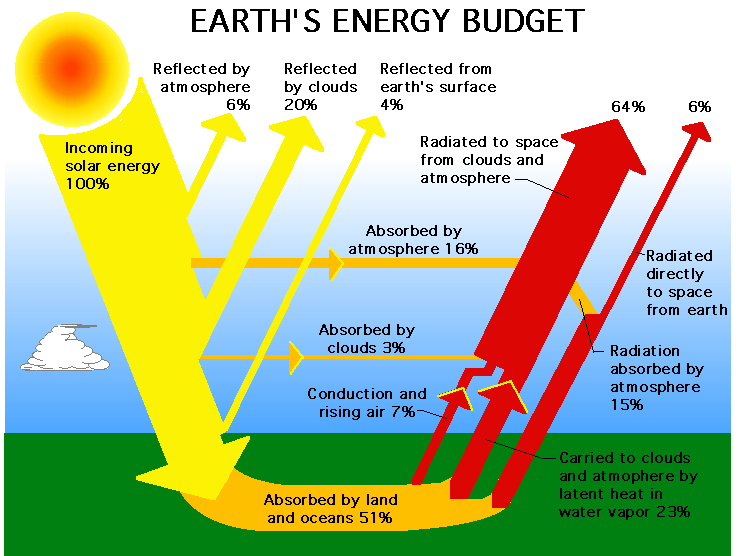
There are two principal activities of humans that modify the pathways shown in this diagram:
 in principle this could lead to global dimming (there is some evidence of this) as less optical sunlight reaches
the ground and more is reflected by the atmosphere (so the 6% number increases).
in principle this could lead to global dimming (there is some evidence of this) as less optical sunlight reaches
the ground and more is reflected by the atmosphere (so the 6% number increases).
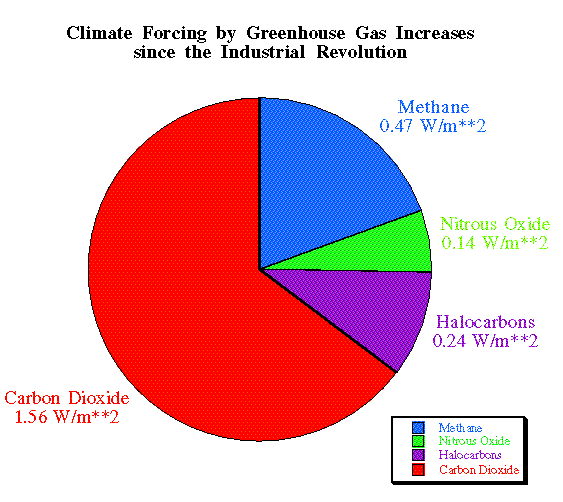
In the climate modeling community, these alterations are called climate forcings and they are expressed in physical flux units of watts per square meter. For example:
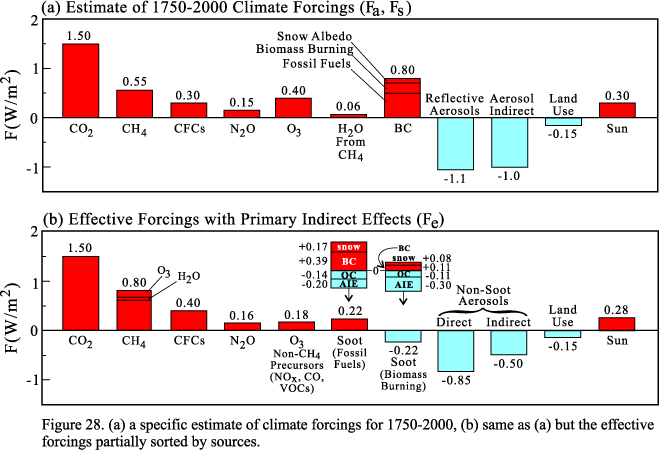
Summarizes what we believe the relative forcings are in the year 2000 relative to the year 1750:
however, since 2000 the CO2
forcing term has risen faster than the others.
Summing all this up leads to a total positive forcing of 4.14 watts per square meter.
To counter that positive forcing:
This then leads to a tug of war that represents the energy balance in the atmosphere as modified by human activities:
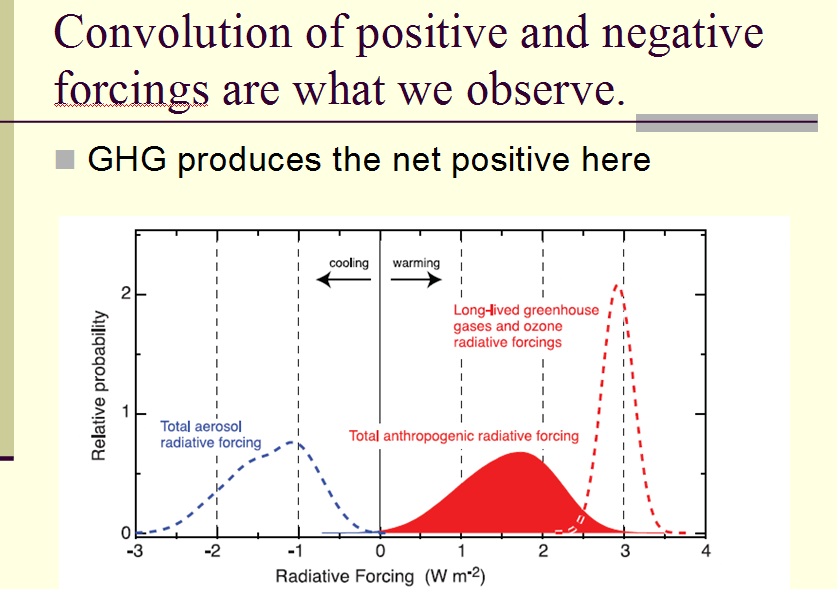
Where the curves represent the total probability distributions of the positive and negative forcings.
The overall rise of the net forcing is illustrated below. The downward spikes seen since 1960 are the result of known, large-scale volcanic events (El Chicon, Pinatubo) that temporarily greatly increase the sulfate aerosol content of the atmosphere.
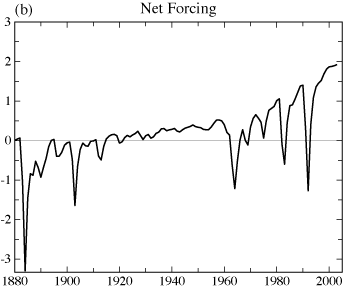
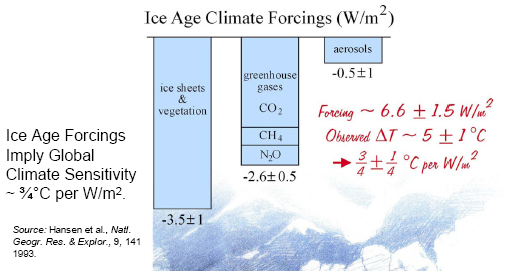
But the most important thing to realize is that the potential positive forcings from greenhouse gas build up are pretty similar to the estimate negative forcings that occur during ice ages (due to changing albedo/reflectivity of the planet, and net loss of greenhouse gases).